© 2026 ALLCITY Network Inc.
All rights reserved.


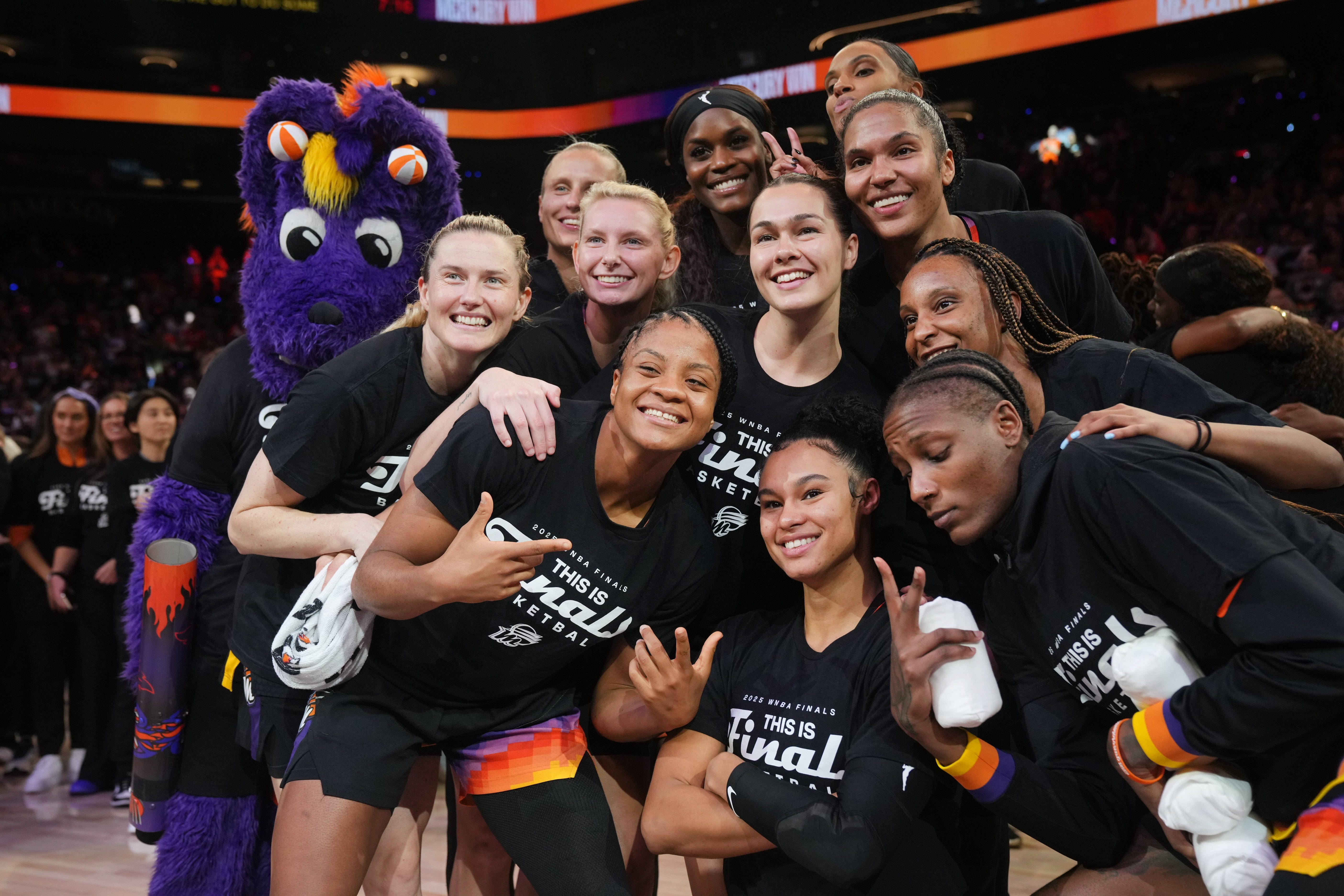
PHOENIX — WNBA players made a bet on themselves after opting out of the final years of their current collective bargaining agreement with the league in October 2024.
The bet paid off.
The WNBA Players Association announced recently that an agreement had been tentatively reached with the WNBA on a new collective bargaining agreement. On Monday, the WNBA players officially approved the deal and on Tuesday, the Board of Governors officially ratified a new, seven-year CBA running from 2026 through 2032, with the new deal kicking in to start the 2026 season.

“The WNBA has gone through a long journey over the last 30 years,” Mercury legend Diana Taurasi told The Spun. “There’s a lot of hard work, grit, perseverance and determination. This is just another milestone for women’s sports. It’s nice to see the WNBA in a better place than where you left it.”
The new deal transforms the landscape of one of the most rapidly growing professional sports leagues in the world.
The new CBA provides players with significant salary increases, establishes revenue sharing, and provides many other benefits. The salary cap is rising from $1.5 million to a staggering $7 million, leading to greatly increased salaries for players at all stages of their careers.
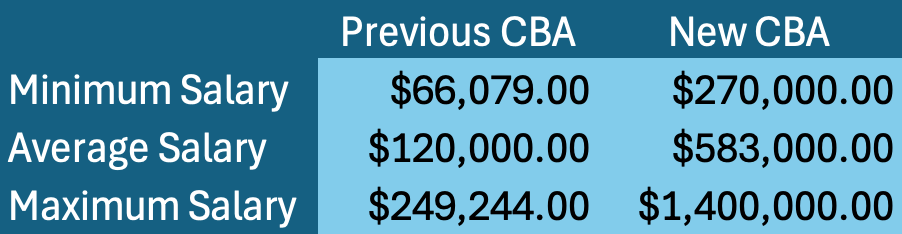
While the minimum salary will scale based on years of experience, the minimum salary for a rookie in the new deal already surpasses the size of a supermax contract in the previous agreement.
As impressive as these figures are, they are only expected to grow as the league’s popularity and revenue increase. Due to the new revenue sharing model, the WNBA projects the salary cap to reach $11 million and the minimum salary to reach $380,000 by the end of the agreement.
A key aspect of the new salary structure is that it is designed to benefit all players, no matter their skill level or experience in the league. This becomes especially evident when comparing the terms of the tentative agreement to other major American professional leagues with a salary cap.

The monetary value of a roster spot is the salary cap divided by the roster size. This number is approximately average salary, and it defines how much money can be spent, on average, for each roster spot without going over the salary cap. The WNBA stands out with a minimum salary player earning more than twice as much (0.46 roster spots vs. 0.20 roster spots) relative to their peers in any of the other leagues. A player with a maximum salary in the other leagues also outpaces their peers by almost double what a supermax player in the WNBA earns compared to their peers (4.60 roster spots vs. 2.40 roster spots).
This collective bargaining agreement, although primarily negotiated by some of the league’s preeminent stars at the head of the WNBPA, works to uplift the league as a whole rather than enrich only the stars.
Increased salary is far from the only benefit of this new deal. Players also secured significant improvements in housing and travel accommodations.
“League-provided housing will be available for all players in 2026, 2027, and 2028, and for players making $500,000 or less in 2029 and 2030,” the WNBPA said in a release. While these housing benefits do not last until the tentative agreement’s expiration in 2032, it is a significant step.
Charter air travel will become the standard league-wide, an investment projected to cost over $300 million throughout the term of the agreement.
Some other benefits include:
Expanded team staffing requirements, including access to additional physicians, athletic trainers, strength and conditioning coaches, physical and massage therapists, and nutritionists. Significant increases in team contributions to player 401(k) retirement accounts. Enhanced life insurance benefits totaling more than $700,000 per player.
There are further measures to promote players’ well-being such as expanded mental health coverage and a new requirement for teams to receive player consent before trading a pregnant player.
As further reward for the game’s best players who drive the popularity of the league, there were plentiful updates to performance and award bonuses as outlined below.
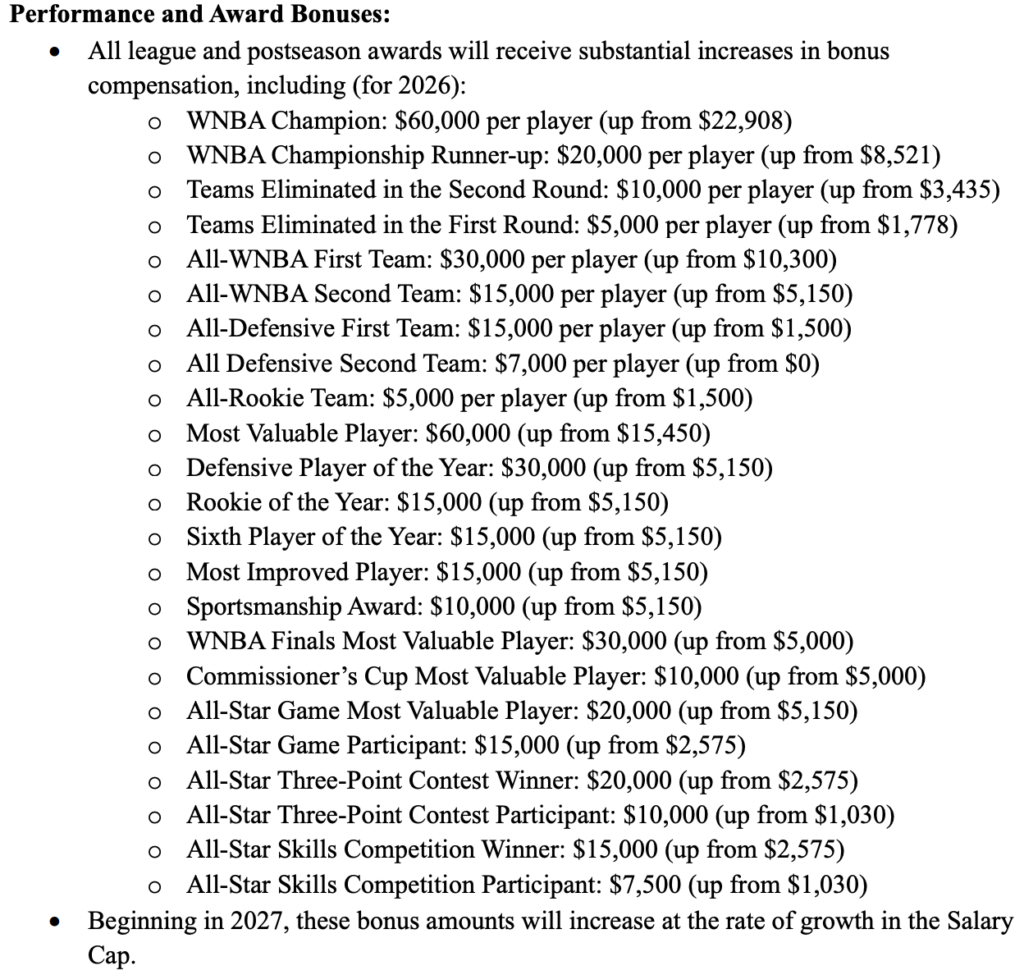
This agreement is a resounding win for the athletes of the WNBA. “Bet on Women” paid off, as the players will experience expanded benefits and a salary cap that, due to revenue sharing, will only continue to surge alongside the popularity of a rapidly growing league.
This article first appeared on Cronkite News and is republished here under a Creative Commons Attribution-NoDerivatives 4.0 International License.
Comments
Share your thoughts
Join the conversation

The Comment section is only for diehard members
Scroll to next article

Don't like ads?
Don't like ads?
