

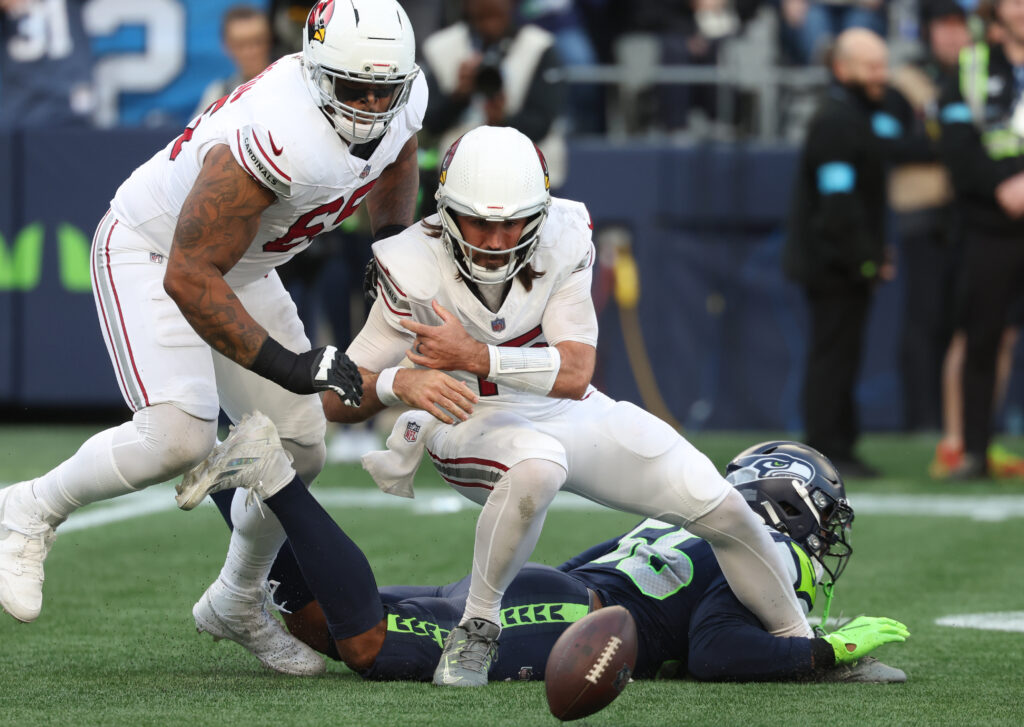
On Sunday, Gardner Minshew took his first snaps as the starting quarterback of the Arizona Cardinals, against one of the toughest defenses remaining on the schedule. It went accordingly.
A banged-up Seahawks roster did not dampen Seattle’s ability to thwart the Cardinals’ offense, and Arizona walked out with a 17-3 loss to Drew Lock, their 11th straight against the Seahawks.
Though Minshew was generally accurate with the football and kept it mostly out of harm’s way, the Cardinals’ offensive line gave him little time to throw — and gave RB Tyler Allgeier little room to run the ball.
It was a game that had signs of the gritty, hard-fought, physical games these two teams used to play when they were more competitive with each other. But the Cardinals were simply outmatched, again.
Cardinals’ offense stagnant vs Seahawks
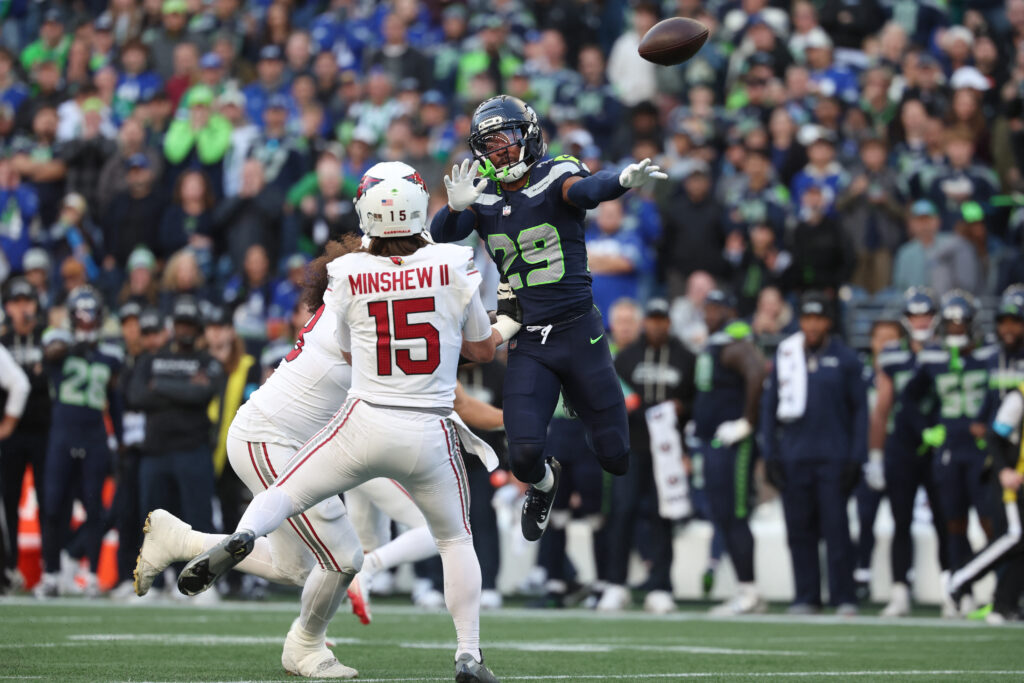
With Jacoby Brissett sent off to the Baltimore Ravens, Arizona’s offense was Minshew’s to run. It looked like a promising day for the Cardinals’ new-look unit at first; Minshew marched down the field for an 89-yard field goal drive and a 3-0 lead.
But after that drive was over, there were no answers for the Seattle defensive line. The Cardinals put up just 109 yards over their following eight drives. 76 of them came on their final drive, on which Arizona turned it over on downs despite reaching the Seahawks goal line. They crossed midfield only three times in the process.
Minshew was hardly to blame, though he was not nearly as electrifying as he was a week ago. He completed 21 of 30 passes, but for only 166 yards — a clip of 5.5 yards per attempt. There was little room downfield, and when there was, Minshew came face-to-face with a Seattle defender before the play was able to develop.
The veteran passer took three sacks for a loss of 18 yards. He was under constant pressure. No Cardinals pass-catcher surpassed Michael Wilson’s 60 receiving yards. Allgeier, the only back to get a carry, was held to 46 yards on 17 attempts.
Simply put, the Cardinals could not handle the Seahawks defensive front. In order to take down an opponent of Seattle’s caliber, Arizona is going to have to outplay them on a physical level. They have yet to show they can do so consistently against quality units.
Cardinals’ defensive effort not enough
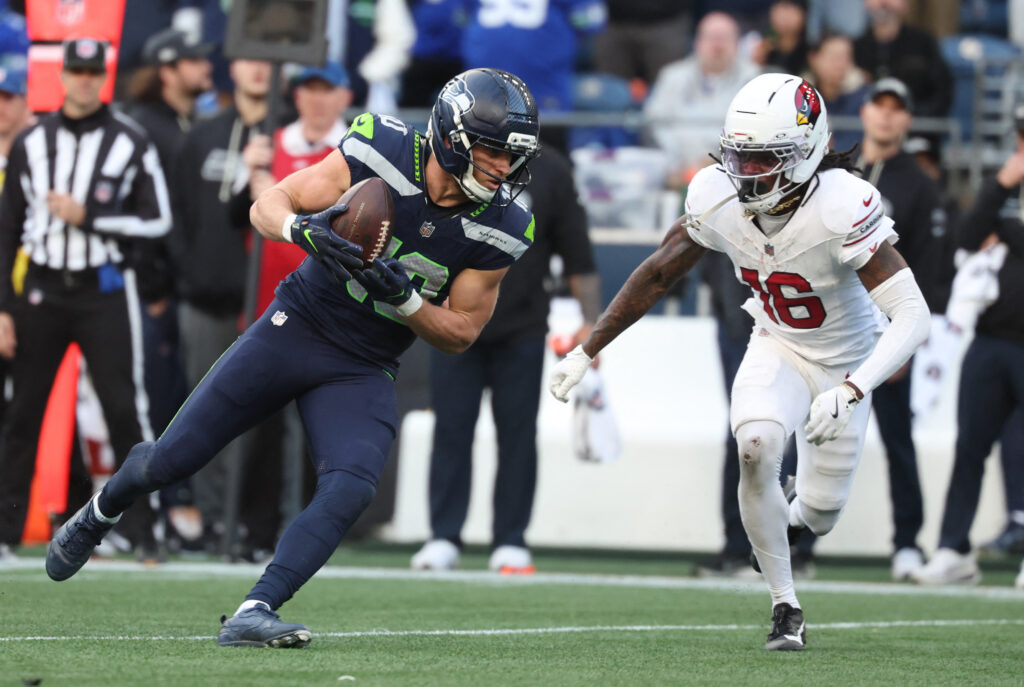
The Cardinals’ defense, which has played better of late, looked up to the challenge on Sunday. They forced a struggling Seahawks offense to punt on their first two drives and allowed only three points in the second quarter.
Lock was held to 175 yards. The Cardinals hit him three times, though they did not record a sack. No Seahawks receiver — including Jaxon Smith-Njigba — had more than 54 yards. Smith-Njigba was limited to 51 yards on 10 targets and no touchdowns.
But two scores thrown to TE A.J. Barner — the second of which came on a baffling ruling by the officiating crew — were enough to put Arizona away. Lock did not have to do much, and did not face nearly as much consistent pressure as his Arizona counterpart.
On the whole, the Cardinals’ defensive effort was not their undoing, though it was an unusually penalty-ridden game — both teams collected nine flags for 80-plus penalty yards apiece. That haunted Nick Rallis’ unit, but they still held Seattle to under 300 yards of offense (295).
Perhaps the Seahawks’ offensive output might have inflated had Arizona’s offense been able to keep pace. Seattle did run for 120 yards, but on just 3.3 yards per attempt.
Regardless, the Cardinals are now 3-6, with the Trade Deadline looming Tuesday afternoon. They’re one step closer to the 2026 season becoming lost, with a 1-3 start to their NFC West tour.