

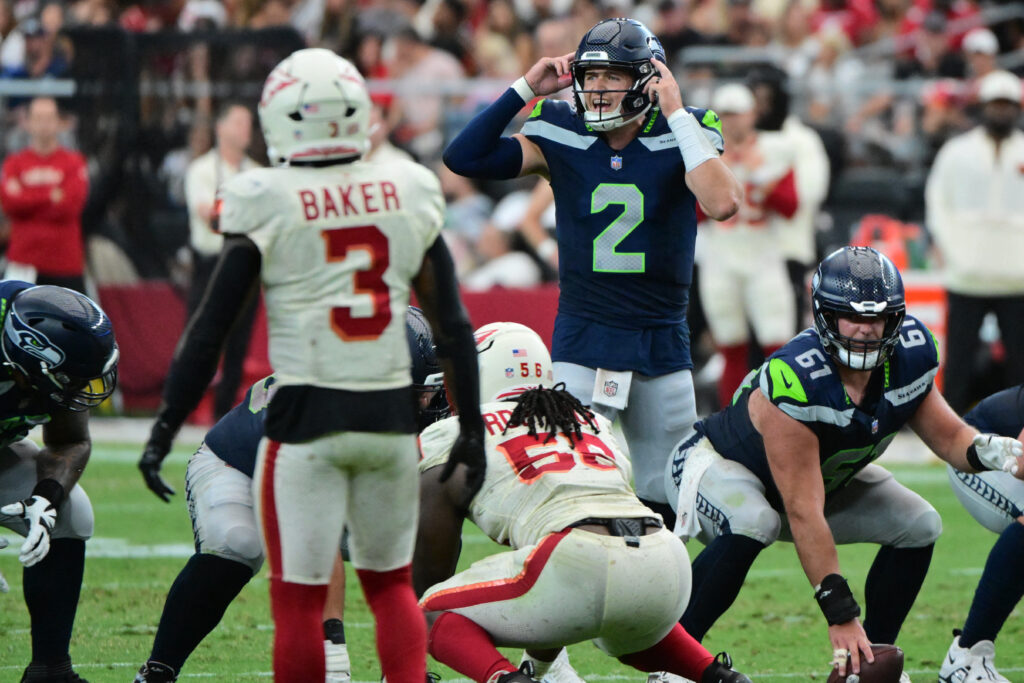
The Arizona Cardinals have not beaten the Seattle Seahawks in years, and that did not change on Sunday afternoon.
Coming off an encouraging 26-14 upset win over the Los Angeles Chargers and staring down Drew Lock making the start for their NFC West foes, the Cardinals became a trendy upset pick this week.
Unfortunately, Arizona has not ranged that far into its resurgence, yet; they are still not quite capable of taking down a team as well-constructed as the Seahawks, regardless of who’s taking snaps under center. Arizona lost 31-7 despite a competitive first half.
Cardinals Can’t Shake Struggles with Seahawks
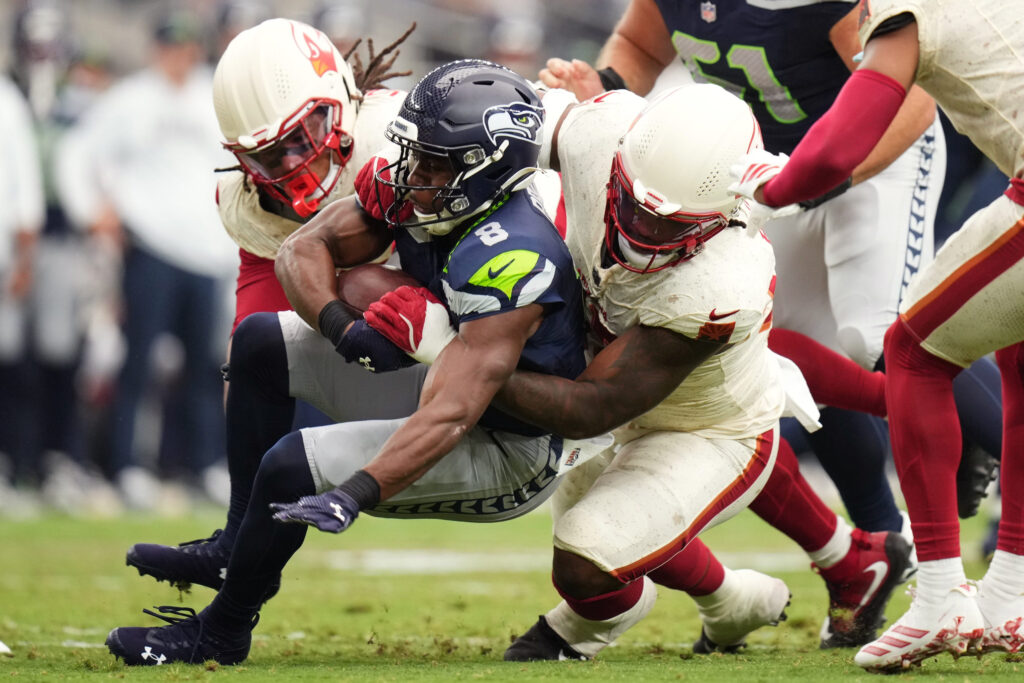
The Cardinals played a solid first half. There was hope, with the score tied 7-7 at the midway break, for a second-half surge. That never came.
Arizona’s offense struggled with the Seattle defense, which wasn’t an immense surprise. It was a rough game for anyone not named Trey McBride, however.
QB Jacoby Brissett, coming off a mostly mistake-free performance in Los Angeles, played a poor game.
Brissett completed 17 of his 28 passes for an abysmal 95 yards, worth just 3.4 yards per attempt. He could not push the ball downfield and did not have enough time to do so. McBride, with 41 yards and a touchdown, was the only Cardinals pass-catcher to surpass 20 yards. Marvin Harrison Jr. was held without a catch.
It wasn’t all on Brissett, though he did not play well. The veteran passer was provided little protection by his offensive line and was sped up all game by the Seahawks defensive front. It’s that exact factor that has been instrumental in Seattle’s recent success, as well as the Cardinals’ two losses to their NFC West foes last season.
But there were also plenty of inaccurate throws and less-than-ideal decisions. Passing windows were tight. Arizona looked like a team that was simply outmanned by a more talented defensive unit, and that is, essentially, the most succinct descriptor of what took place at State Farm Stadium.
The Cardinals’ defense, on the other hand, looked as if it was about to continue its positive momentum. They disrupted Seahawks QB Drew Lock early and forced both a fumble and turnover on downs deep in their own territory. If not for a blown coverage on the first drive of the game, defensive coordinator Nick Rallis might have pitched a first-half shutout.
But then, reality struck. Once it was clear the offense could not propduce, Seattle pushed a likely-tired Cardinals defense around in the second half.
Arizona had no answer for WR Jaxon Smith-Njigba, who picked up 155 yards and three scores. He was, in essence, Lock’s only target, and the Cardinals could not stop him. The NFL in general seems to be clueless when it comes to limiting his output, and Arizona did not buck that trend.
In total, the Cardinals allowed 381 yards of offense and only picked up 151 of their own. That is not a way to win a game.
Should poor Seahawks outcome change perception of Cardinals?
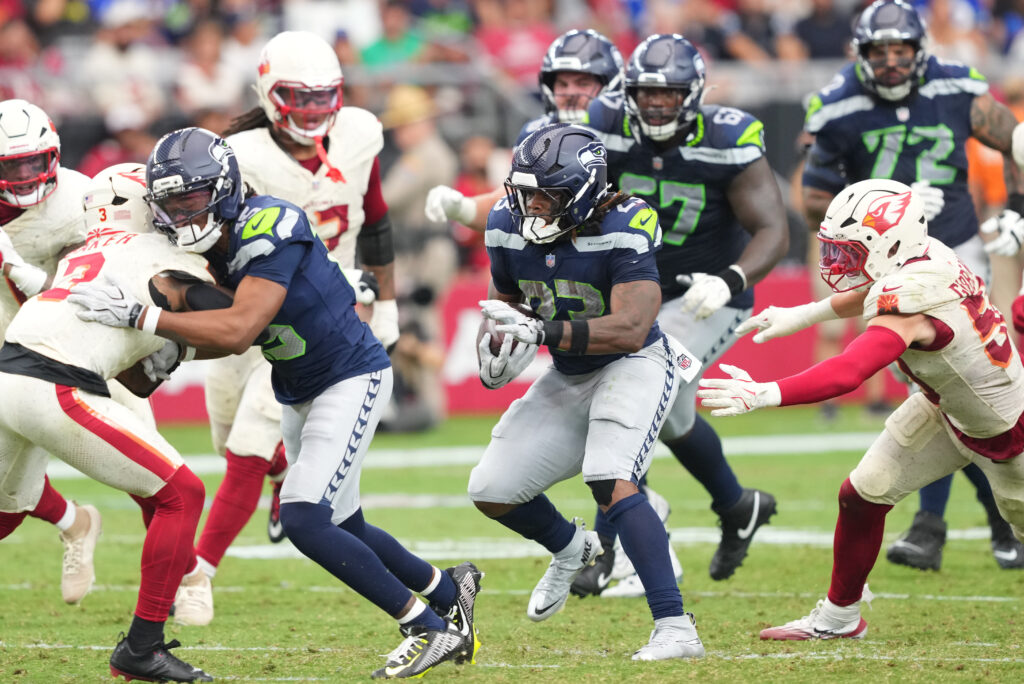
A blowout loss to a division rival is never a good sign. A loss in general is disappointing. This performance, while poor in almost every area, was predictable, and should not erase the encouragement of week one’s victory.
The Cardinals earned their hype this past week; beating even a poor Chargers team week one was not a fraudulent moment for a team that had not beaten an opponent since November 3 of 2025 prior. But they simply do not match up well enough with Seattle at this stage.
Sunday’s loss to the Seahawks is a reality check — not one that suggests Arizona is destined for another brutal year, but rather that this team is still in its early stages of returning to relevance. This was simply not good enough.
The Seahawks are a more talented team. Their defense is elite on all facets. Their offense does not depend on who is throwing the football, whatsoever. They control the line of scrimmage and play downhill football, week in and week out. This type of result is to expected, and will happen to more teams than just Arizona this season.
But it’s not time to sell all your stock in the Cardinals, or in head coach Mike LaFleur. There will be a learning curve for the rookie head coach, even given his experience in the NFC West. If this genre of outcome persists, there will be real cause for concern. For now, it’s not irresponsible to consider Sunday a growing pain.
Right now, my perception of this team remains unchanged: the Cardinals are going to win more games and look more competitive than national pre-season narratives would have believed. But they are still time, talent and a franchise QB away from contending for the toughest division in the NFL.