© 2026 ALLCITY Network Inc.
All rights reserved.


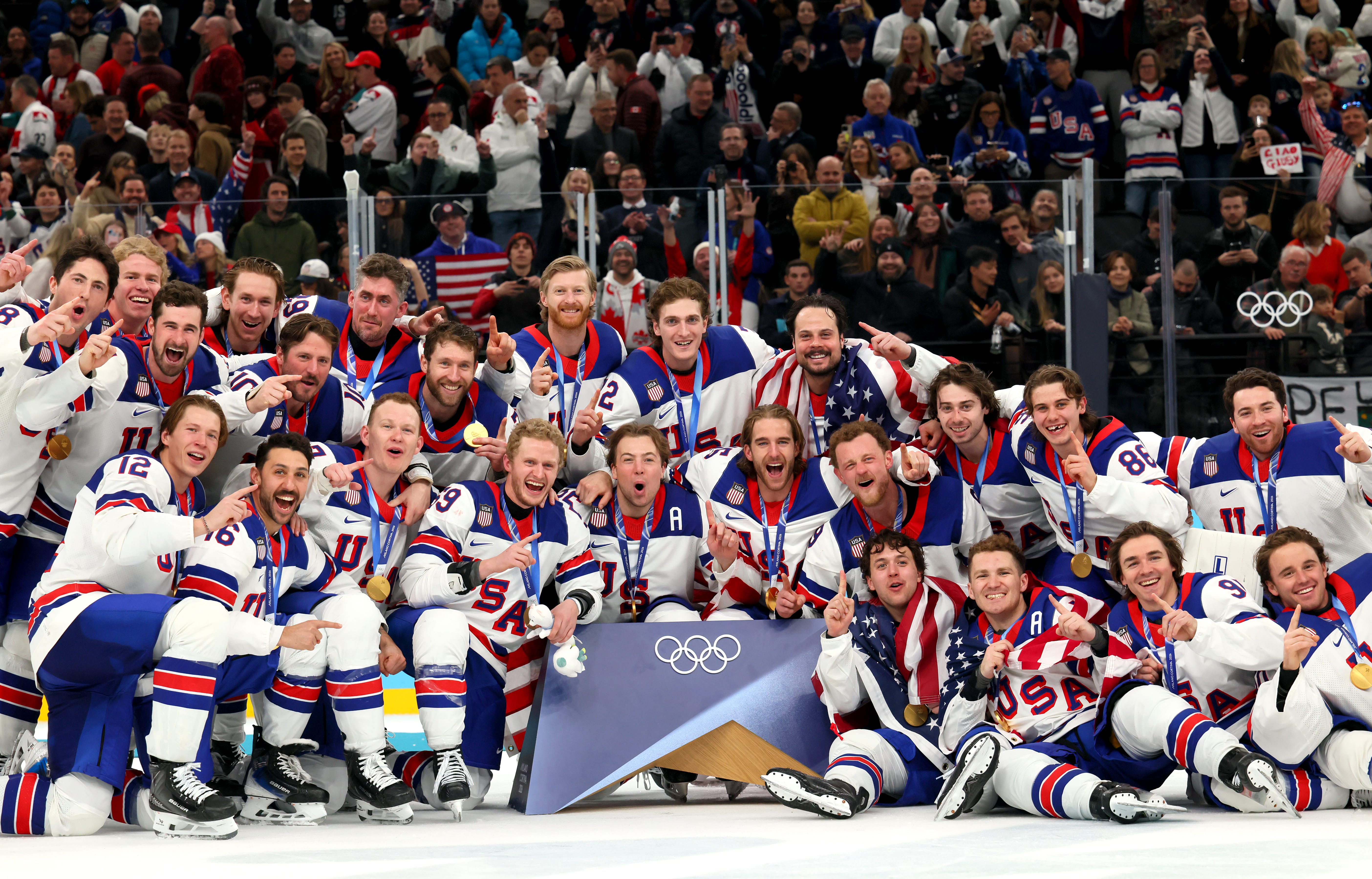
PHOENIX — The United States looked drastically different in 1980. A bottle of Coca-Cola was 25 cents, a gallon of gas hovered just over $1 and a Honda Accord cost just under $10,000.
The hockey landscape looked different, too. The U.S. men’s team won Olympic gold 46 years ago at Lake Placid, New York in what became known as the Miracle on Ice, defeating the heavily favored Soviet Union, but it took decades for America to recreate similar drama.
Team USA finally recaptured that glory at the Milan-Cortina 2026 Winter Olympics last Sunday, defeating Canada in overtime, 2-1, and capturing the nation’s attention much like it did in 1980.

This time, the gold medal run wasn’t defined by improbability, but by the evolution of a sport that now reaches nearly every corner of the country, and crosses gender divides.
With more than 650,000 registered players nationwide, the infrastructure surrounding American hockey looks dramatically different than it did in 1980, something USA Hockey executive director Pat Kelleher says positions the sport for another wave of growth, on both the men’s and women’s sides.
“We’re talking about the impact of a gold medal on both the women’s and men’s sides,” said Kelleher, who was in Milan to watch the US men and women both defeat Canada by the same score in OT. “We’ve never done that before. The game being national is the biggest difference since 1980, and the next part is that it includes boys and girls, men and women.”
The difference between hockey in the United States today and in 1980 is no longer visibility, but accessibility. A nationwide system now exists to support the interest Olympic success creates.
“We’re very different as a hockey country now compared to 1980,” Kelleher said. “We truly are a hockey country, with rinks and facilities across the country. With Olympic success bringing in new fans and people who may not have been engaged before, we’re ready. We have programs in place and people ready to welcome them.”
USA Hockey’s data on youth participation does not extend back to 1980, but for perspective, and per QuantHockey, 72 U.S.-born players appeared in NHL games during the 1979-80 season, accounting for roughly 11% of the league.
By the 2005-06 season, enough time for a new generation of players to develop, that number had grown to 182, making up about 19% of the NHL.
Participation growth isn’t limited to the men’s side. During the 2024–25 season, 98,394 girls of all ages were registered to play hockey in the United States, a 5.1% increase from 2023–24. Women’s ice hockey officially became an Olympic sport at the 1998 Winter Games in Nagano, Japan, where Team USA beat Canada to capture gold.
In markets with National Hockey League teams, Olympic momentum often translates into increased fan interest and youth sign-ups. On the flip side in Arizona, the United States’ gold medal comes at a time when the Valley hockey community is operating without an NHL franchise after the Coyotes relocated to Salt Lake City in 2024.
“I feel like the buzz around the gold medal across the country is going to be huge,” said Nick Naumenko, hockey director of the Junior Sun Devils who are based out of the Mountain America Community Iceplex on the ASU campus. “It’s unfortunate we don’t have an NHL team here, because that momentum would have carried into the rest of the season.
“Whether we get that boom or not, we’ll see over the next summer of sign-ups, learn-to-skate and learn-to-play programs, and how many parents with 4-, 5- or 6-year-olds decide to give hockey a try. That’s really what we’re hoping for.”
The departure of the Coyotes removed a major local connection to the sport, leaving youth programs and community rinks to play a larger role in maintaining interest in hockey across the Valley.
“The growth may not immediately show up in local club numbers, but I’d love to see a spike in public skating, learn-to-skate programs and all the in-house programming an ice arena offers,” Naumenko said. “Those are the areas where growth really starts.”
Junior Coyotes director of hockey operations Mike DeAngelis said the Olympic spotlight, particularly with strong Arizona connections on Team USA, could temporarily replace that missing visibility.
“I think we saw a downturn in interest when the Coyotes left and we no longer had NHL hockey right in front of us every day,” said DeAngelis, whose organization is based out of the Ice Den Scottsdale. “But the gold medal attracted a lot of attention locally because there were strong Arizona ties on that team.”
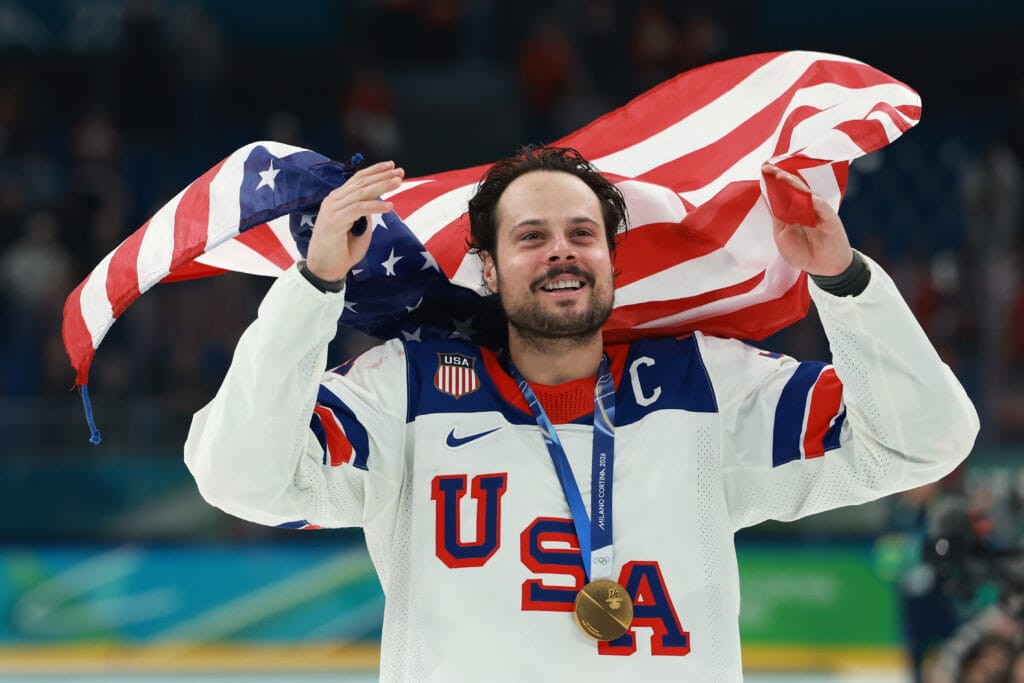
Some of the notable Arizona ties on Team USA included players Auston Matthews, Clayton Keller, Tage Thompson, Brady Tkachuk and Matthew Tkachuk. Matthews grew up in Scottsdale and played for a trio of local youth teams. Thompson and the Tkachuks were born in the Valley, and Keller played for the Coyotes from 2016-2024, where he still lives in the offseason when his new team, the Utah Mammoth, has completed its season.
It’s a continued reminder for young players in Arizona that reaching the highest level of the sport is possible, even from a nontraditional hockey market.
“Younger players that play elite hockey can come from here,” DeAngelis said. “Kids see players with Arizona connections winning on that stage, and it makes the sport feel more real and attainable for newer players.
“Auston Matthews has obviously been a huge torchbearer for hockey in Arizona. Beyond just the Olympic team, we have four or five players currently in the NHL who came through Ice Den Scottsdale and the Junior Coyotes program.”
In Arizona and across the country, the combination of gold medals from both the men’s and women’s teams has created a rare moment of unified attention on a sport that often struggles to break into the national spotlight, Kelleher said.
“The Olympics happen only once every four years, and the entire country gets behind Team USA,” Kelleher said. “When you have success like winning double gold medals, the country takes notice. Millions of people watched the men’s gold medal game and millions more watched the women’s game, many of whom may not normally watch hockey.”
USA Hockey expects measurable growth to appear gradually rather than instantly.
“The real impact will show about a year from now,” Kelleher said. “The post-Olympic year is usually when growth begins to appear. We’ll be able to track it and measure it, and that will be the biggest metric for us.”
If the Miracle on Ice introduced hockey to a wider American audience, the Milan-Cortina 2026 Winter Olympics gold medals show how far the sport has come with growing youth participation, while still looking for deeper roots in markets like Arizona.
For now, the Valley’s hockey community is riding the Olympic wave, hopeful that the excitement translates into lasting growth and perhaps, one day, a return of the NHL to the desert.
“Anything that helps grow hockey in this market excites me,” Naumenko said. “The gold medal is amazing for USA Hockey, and if we see a spike, we’ll absolutely take it.”
This article first appeared on Cronkite News and is republished here under a Creative Commons Attribution-NoDerivatives 4.0 International License.