© 2026 ALLCITY Network Inc.
All rights reserved.



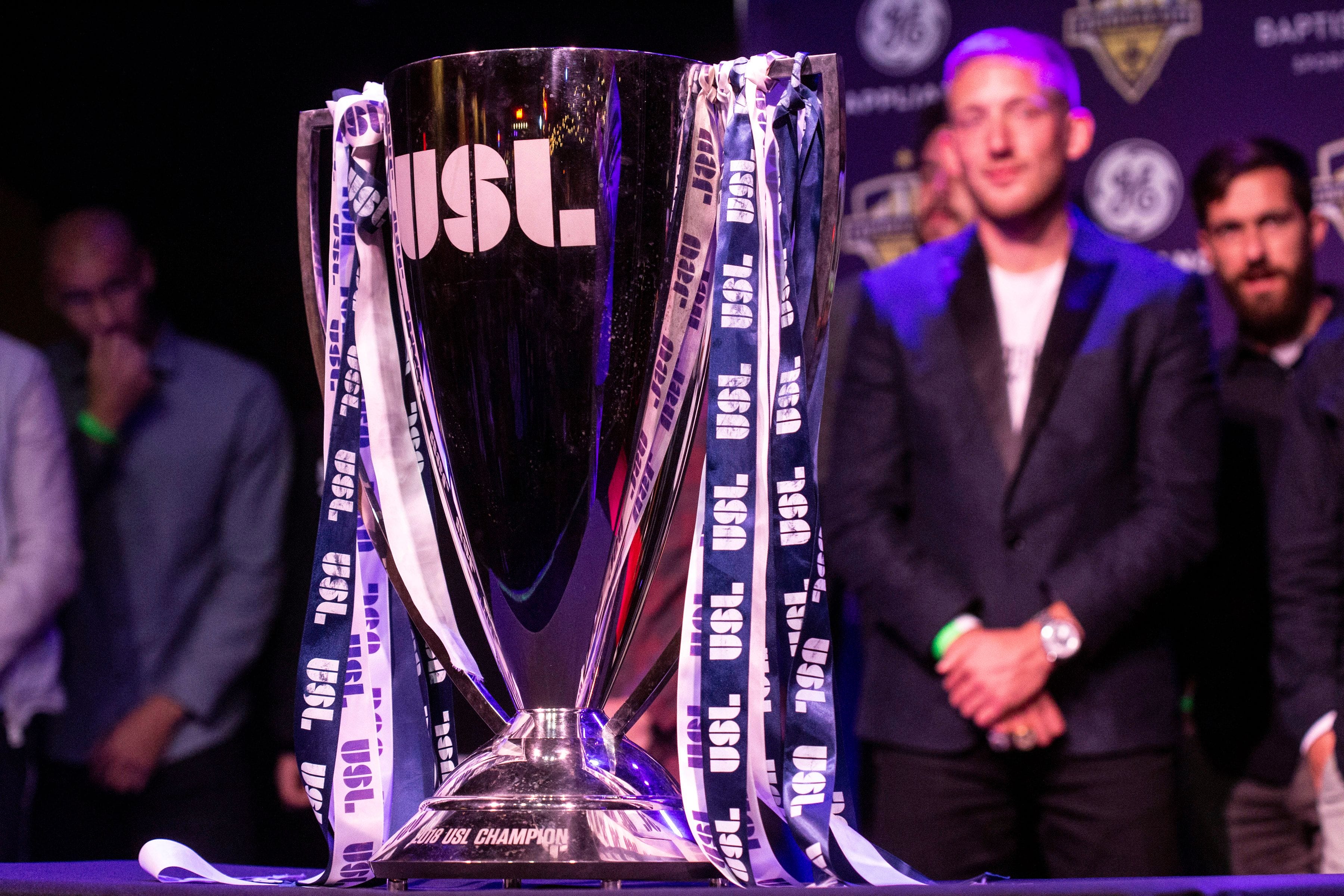
A top players’ union official refused to rule out strike action impacting the opening weekend of the USL Championship‘s 2026 regular season.
Connor Tobin, executive director of the USL Players’ Association (USLPA), told PHNX that “everything’s possible” regarding a work stoppage as soon as this weekend.
“All options are on the table,” Tobin said. “That’s essentially what the players have told our bargaining committee.

“We’re trying to get to a deal. That’s always where we’ve operated from, but there’s a recognition from our player pool, given how the league has approached us, given what the league currently has on the table, that our bargaining committee needs all options available to them.”
Play is set to begin on Friday night, as Lexington SC take on Louisville City. Phoenix Rising‘s season is set to start in San Antonio on Saturday.
The USL Championship’s collective bargaining agreement expired earlier this offseason, and no new deal has since been reached. Last week, the USLPA put forward the league’s most recent proposals to its membership, which was rejected by 90% of voters.
There have been no formal bargaining sessions since then. A mediation session scheduled for Wednesday, March 4, is the only session currently on the calendar for this week, although more may be added later.
“We’re over 550 days into trying to bargain the successor agreement, and the distance between the parties is still pretty significant, so that’s frustrating,” Tobin said.
A USL spokesperson pointed to the league’s website, which states that they “have made substantial movement across every major issue raised by the union.” It also argues that “much of the public discussion has not reflected how far negotiations have progressed or the scope of the League’s proposals.” A previous statement issued by the league last week stated that they “have been negotiating in good faith with the USLPA for more than a year and remain committed to reaching a fair and sustainable collective bargaining agreement.”
“It’s frustrating from a players’ union perspective to hear the league talk about: ‘well, the players’ union is not moving. They’re not negotiating,'” Tobin said. “If you look over the history of our labor relations between us and the league, we have given some really significant things, and we’ve absolutely shown an ability to come to the middle, if not even go past the middle, to deal with things that should never have been there, like zero dollar contracts.”
The league and USLPA are currently negotiating the second collective bargaining agreement in league history, with the first agreed at the tail end of the COVID-19 pandemic in 2021.
“When we first formed the organization in 2018, it was a bunch of older guys in the league basically realizing ‘hey, we have zero dollar contracts in this league,'” Tobin said. “‘We have players that don’t have access to health insurance. This is not OK.’ None of us really knew what we were doing, but we created an organization that allowed players to speak on this and gave us a formal seat at the table.
“The first CBA we did in 2021, and we took three years to negotiate that, was honestly the minimum level that we could possibly set about what this league was. That is far below what was a liveable wage, what the conditions we felt like we deserved we deserved. But we settled for that because we recognized where a lot of the businesses were at at that the time and the time it was going to take to evolve them.”
That agreement set some standards for players at first, but still left many at the bottom end of the scale on low wages with minimal benefits.
“When we talk about what the players experience at this level, I think the day-to-day reality would blow people’s hair back a little bit,” Tobin said. “We still have players in this league that qualify for food stamps. That’s the level they’re being compensated at, but yet, we talk about how professional this is and how professional our clubs are.”
Among the issues that remain a sticking point for both sides is health insurance for players. According to Tobin, a lack of leaguewide standards has led to subpar coverage at some clubs.
“Something like health insurance is an independent employment decision that each club then makes, so we have a wide range of what that actually looks like,” Tobin said. “We have some great employers in USL Championship. We have some employers that offer 100-percent coverage, even dependents we can put on it. We have other clubs — we had seven of them in USL Championship this lasts year — that didn’t even provide access to a health insurance plan. That gives you the range of what we’re dealing with.”
According to Tobin, all of those seven clubs offered health insurance to front office staffers, but not to players. Even where health coverage has been offered, some plans come with large deductibles.
“What’s the value of a $10,000 deductible plan if a person’s on sub-$40,000?,” he added.
In an online statement, USL argues that its proposal would ensure that “clubs must offer health insurance materially similar to what they provide other full-time employees at the club.” A league source also argued that only four clubs had failed to offer health insurance, with one of the four offering a stipend in its place.
Another major sticking point in negotiations has been the right of clubs to buy players out of their contracts at a reduced rate.
“The reason it’s such a big issue at the table is that the league is making it a big issue,” he said. “They’re saying that they can’t move on any of these issues until we give them a unilateral buyout.”
Tobin described these buyouts are representing a contract being “taken away for pennies on the dollar.”
“How can you go in good faith and try and recruit that player?” Tobin said. “It makes the league seem Mickey Mouse.”
Looking towards a potential strike in the near future, Tobin said that the organization and its striking players could find relief from organizations that the USLPA is affiliated to, such as the Communications Workers of America Union.
“[The CWA] has a pretty significant strike fund, I think it’s north of $400 million, that as an affiliate organization we can tap into,” he said. “We also have very strong relations with the AFL-CIO.”
The current negotiations affect only the USL Championship. The USLPA will also have to negotiate for League One’s collective bargaining agreement, which expires at the end of 2027, while a proposed USL Premier first division league would likely also need to enter similar negotiations at some time in the future.
“None of these negotiations are a one-off,” Tobin said. “I think that some of the issue that has happened this go around, at least what we perceive from management side, is there’s a number of people on that side of things that want to view this as a one-off negotiation. ‘Hey, we’re giving you this, but we don’t feel like we’re getting a bunch here.’
“Well, hold on. Look at the first CBA. Look at all the things we gave up to get rid of zero dollar contracts to get any sort of standard in place, and so hey, from our perspective, the pendulum swung back around. These are the things that we need. We’ve got to finish these things but you have some people that want to view this in isolation. That’s not labor management relations.”
Comments
Share your thoughts
Join the conversation
The Comment section is only for diehard members
Scroll to next article

Don't like ads?
Don't like ads?
